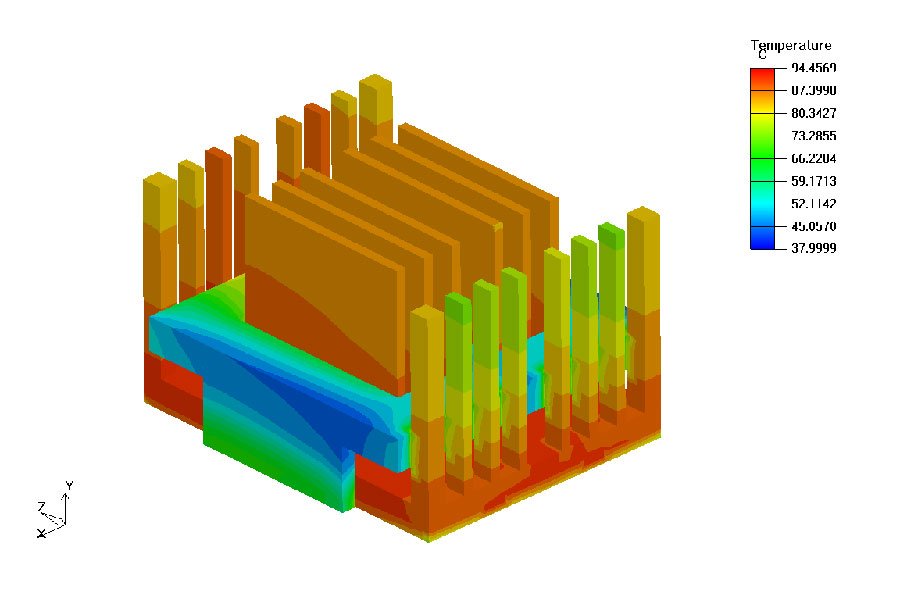
The CFD Analysis of Heat Sink project evaluates and optimizes heat‑sink performance using Computational Fluid Dynamics to predict airflow, temperature distribution, and pressure drop. By virtually testing fin geometry, spacing, and materials, you can cut prototypes, lower costs, and reach a cooler, more reliable design faster.
Key outcomes include lower thermal resistance (Rθ), reduced hot spots, and balanced pressure drop, ensuring the best trade‑off between cooling and fan/pumping power.
Parts Used:
- CAD Geometry – Parametric model of base, fins (straight/pin/plate/annular), shroud, and enclosure.
- Material Definitions – Aluminum/ copper thermal properties; TIM (thermal interface material) layer.
- Heat Source Model – CPU/LED/power module with specified heat flux or wattage + footprint.
- Airflow Source – Fan/blower curve (P‑Q data) or inlet velocity for forced convection; ambient setup for natural convection.
- Meshing Setup – Inflation layers at walls, refined mesh around fin tips and wake regions.
- CFD Solver – ANSYS Fluent / SolidWorks Flow / OpenFOAM with steady or transient runs.
- Physics Models – Turbulence (k‑ε/k‑ω SST), conjugate heat transfer, radiation (optional).
- Boundary Conditions – Inlet temperature, outlet pressure, wall roughness, heat sink base contact.
- Validation Toolkit (Optional) – Thermocouples/IR camera, power resistor mock die, wind‑tunnel/duct.


 Got Questions About Your Final Year Project?